
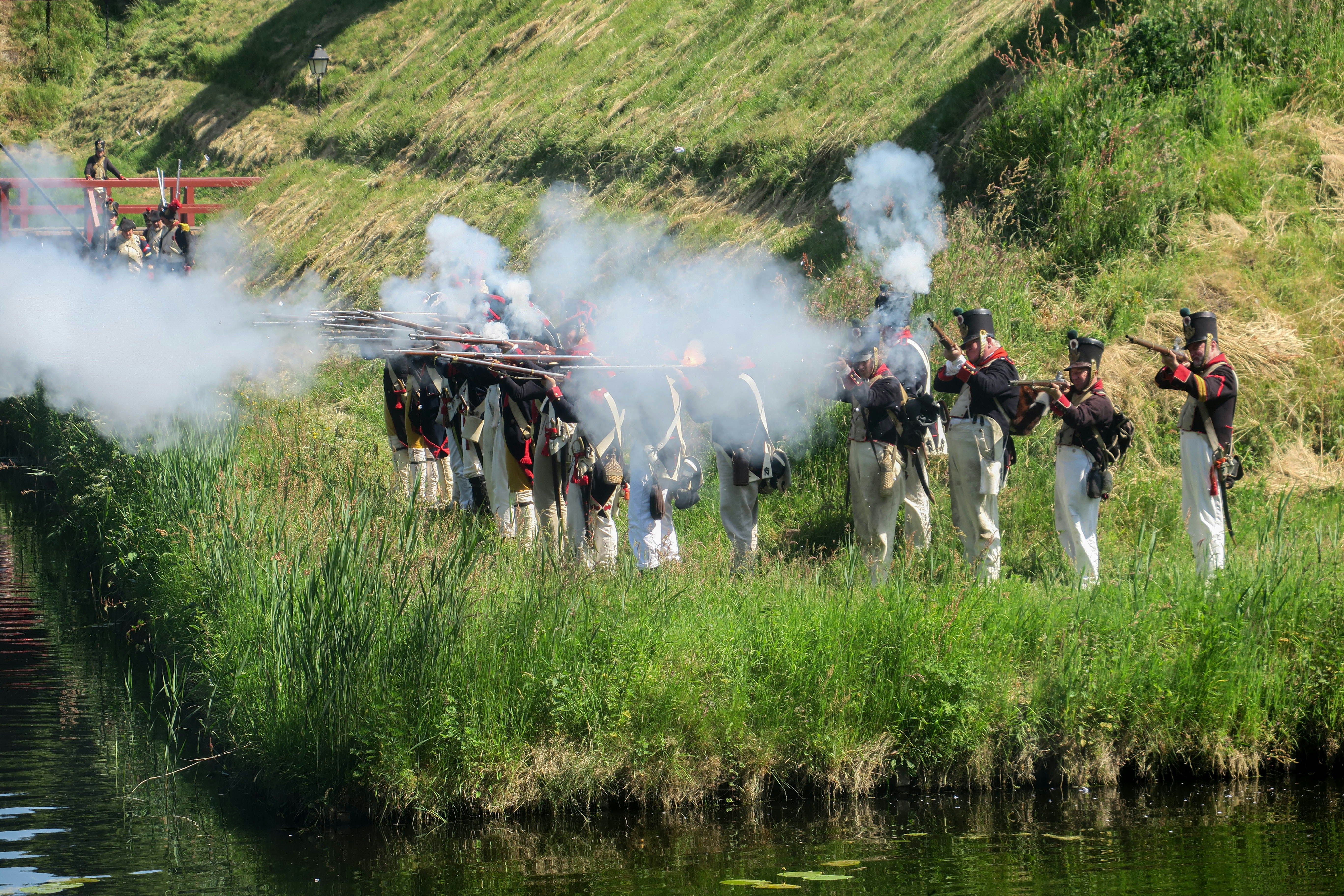
We Do Not Play Dress-Up.
We Remember.
A living archive of impressions, drills, and dispatches — written by the hands that carry the cartridge boxes.
3,400+ historians across 14 eras
Chapter II
Friday Night. Canvas Up.
The ground is still damp from Thursday's rain. You hammer the last tent peg by lantern light.
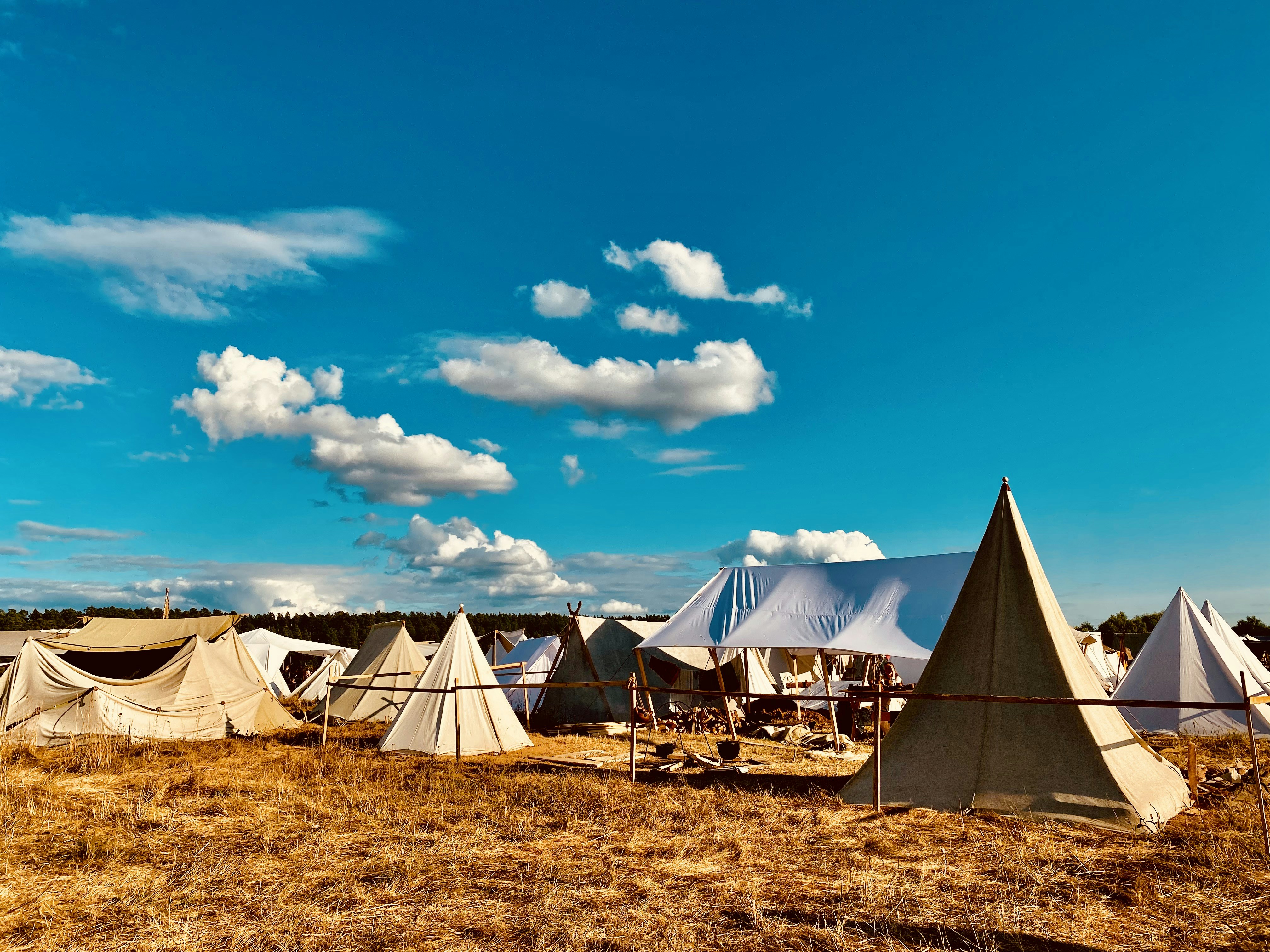
Camp Hardee, Shenandoah Valley — October 2025
he smell hits you first. Wood smoke and wet wool and something faintly sulfurous that you can't quite place until you remember the cartridge bag still in your haversack from last month's drill. You find your spot in the company street and start unrolling the canvas. Someone three tents down is already playing a fiddle. Nobody asks them to stop.
This is the part the photographs never quite capture — the twenty minutes before supper when the whole encampment settles into itself. A sergeant from the 5th Virginia is reading a letter by the fire, holding it close to the flame. His wife wrote it the morning of Fredericksburg. He's had it memorized for years, but he still reads it out loud every Friday night.
"I spent eleven months dyeing linen with walnut hulls to get the right shade of butternut. The first time I wore it into the field, an old-timer stopped and just nodded. That nod was worth every stained hand."— Margaret Holloway, 19th Tennessee impression, 14 years
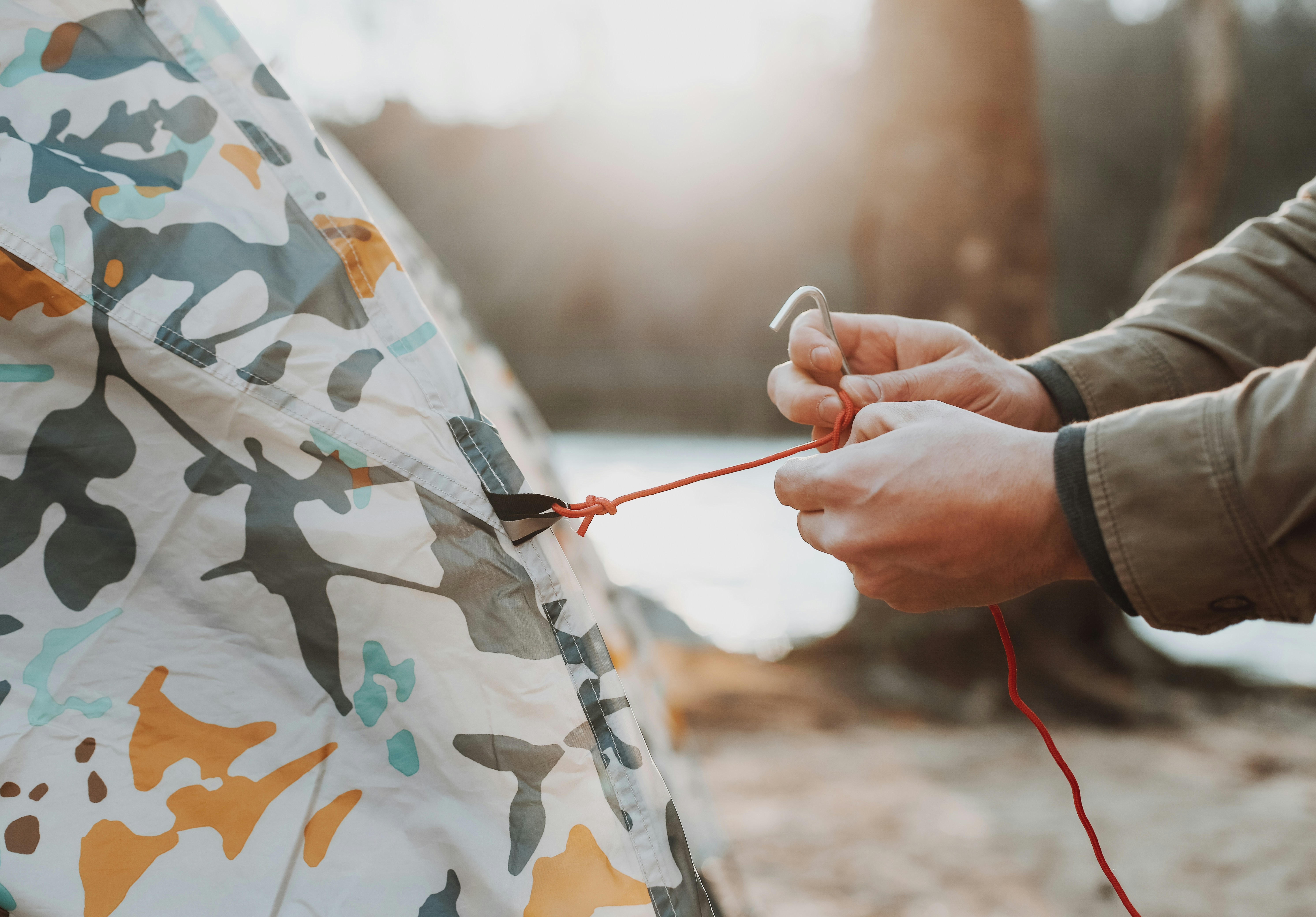
Canvas and pegs, 4:47 p.m.

Coffee, or something like it.
Chapter III
The Mid-Day Volley
Second person. Present tense. Because you are there.
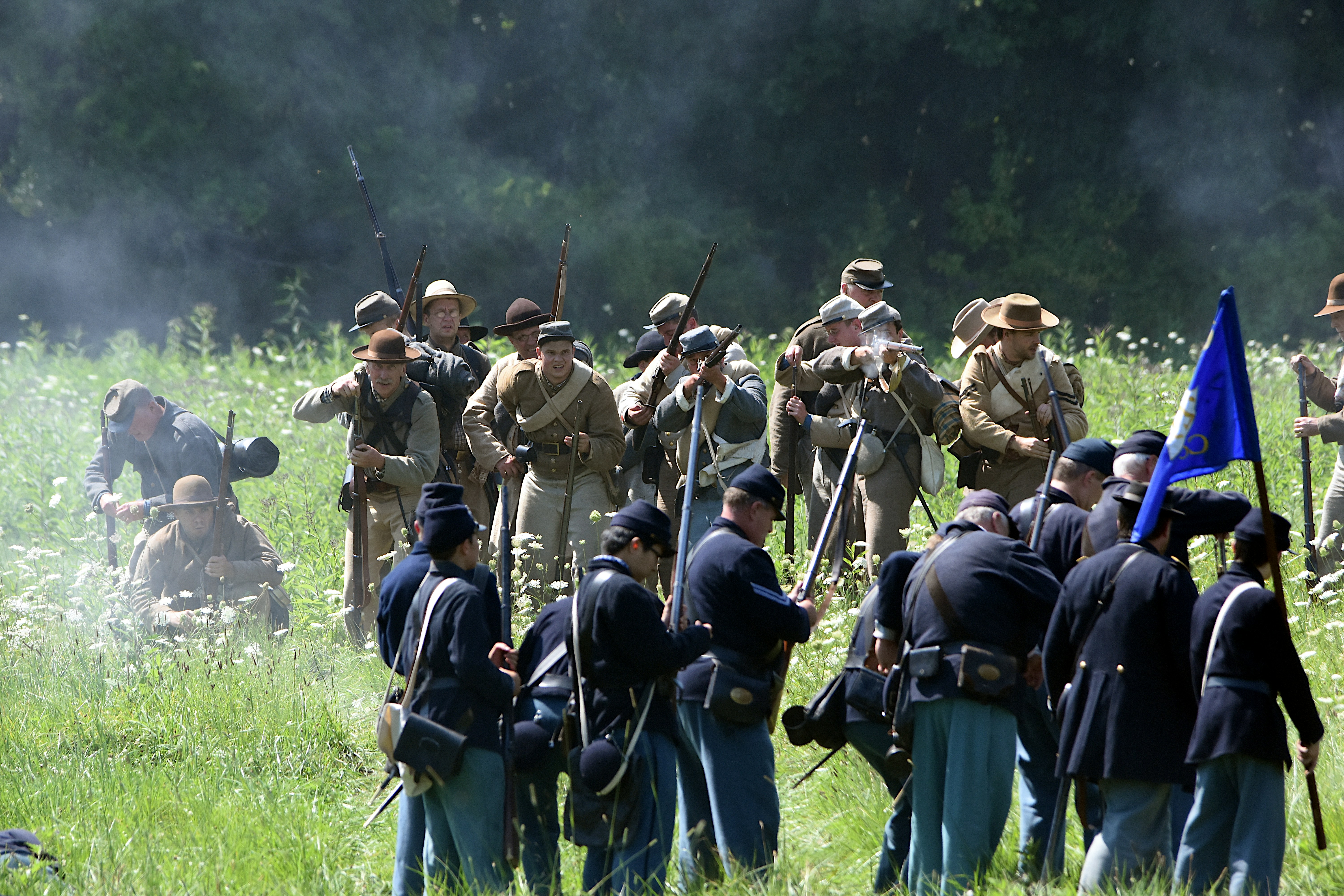
Saturday, 11:23 a.m. The line holds.
You bite the cartridge. The paper is dry and tastes of salt and something sulfurous — not unpleasant, just old. You pour the powder down the barrel without looking. Your hands know this now. They didn't three years ago.
The command comes: "Make ready." The line around you stiffens. Someone to your left is holding their breath. The smoke from the last volley hasn't cleared yet — it sits low in the field like ground fog, and through it you can see the opposing company advancing at route step, their colors snapping in the wind.
"Present." You raise the musket to your cheek. The stock is warm from your grip. The world narrows to the front sight, the smoke, and the sound of your own pulse.
"Fire."
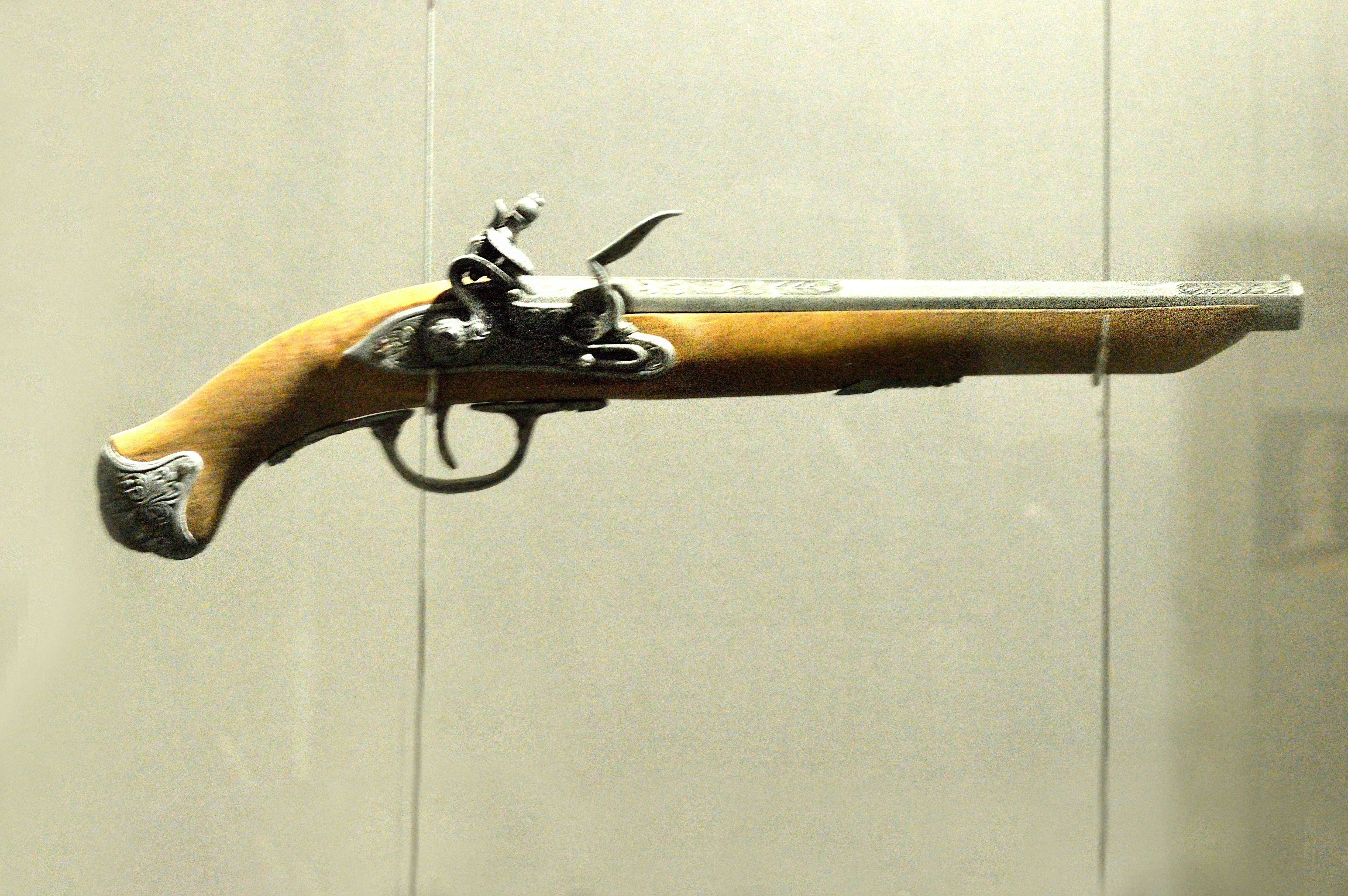
The ramrod. Every load, the same motion.
"The first time the line fired together — really together — I understood why they called it a wall of fire. Nothing prepares you for the sound of thirty muskets going off as one."— Thomas Bricker, 28th Massachusetts, 6 years reenacting
Your Impression Awaits
The smoke hasn't cleared yet.
Neither have you.
Three thousand historians have already found their unit. Yours is still forming.
Join the Muster RollChapter IV
Saturday Evening. The Fire Circle.
After the last volley. After the smoke. This is the part they don't show in the photographs.
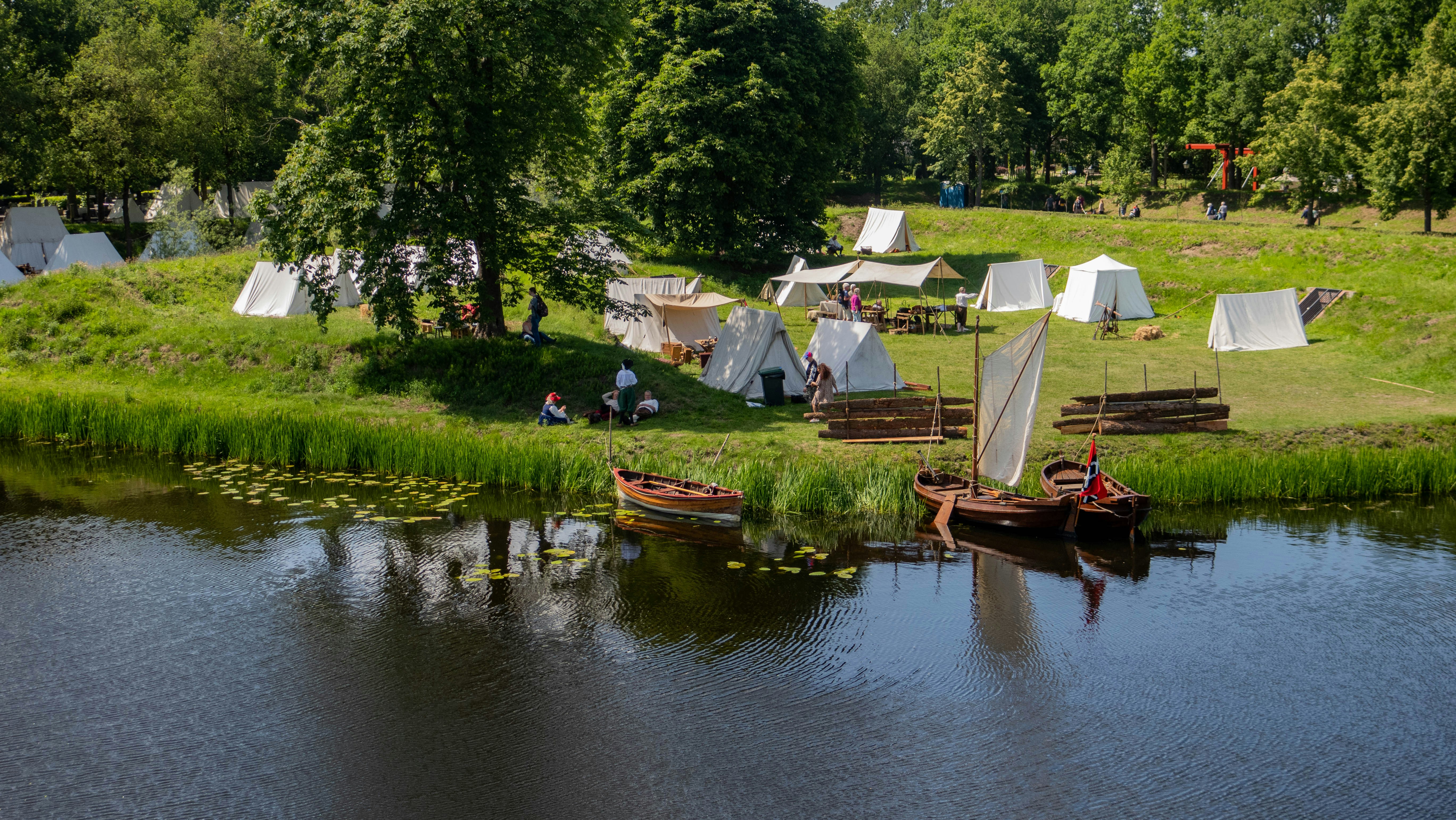
Reading by firelight. The same letter, every year.
A Soldier's Letter
"My Dearest Margaret,
If this reaches you, it will have traveled farther than I have."
Corporal James Whitfield wrote those words on November 11th, 1863, from a camp outside Chattanooga. He was twenty-two years old. The letter is in the Tennessee State Archives. Every year at this encampment, someone reads it aloud by the fire.
Nobody talks when it's being read. The fiddle stops. The coffee goes cold. When it ends, someone always says the same thing: "He made it home." He did. He lived to 1914. He never talked about the war.
From the Muster Roll
"I came for the uniforms. I stayed for the letters. Sitting around the fire while someone reads from a real soldier's diary — that's the moment it stops being a hobby."
Denise Calloway
Continental Line, 4th Virginia Regiment
"Chronicle is the only place I've found writing that treats this seriously. No snark, no apology. Just people who care deeply about getting it right."
Rafael Montoya
Union Army, 54th Massachusetts
"I retired after thirty years teaching high school history. Now I drill every third Saturday and I learn more in one weekend than I did in a semester of lecture prep."
Harold Pemberton
Continental Artillery, 2 years

The mud cakes on the leather turnbacks. It's not a costume. It's evidence.
Chapter V
Join the Muster Roll
Tell us your impression. Tell us how long you've carried the kit. The company forms at dawn.
Free Resource
Download the Beginner's Kit List
Not ready to commit? Start here. A curated PDF of everything you need for your first impression — sourced from people who made every mistake so you don't have to.
Email only. No pressure. No muster required.